Each spring, Logan County welcomes back some very special visitors—and this year is no exception. As the phrase “Bem-Vindo de Volta” (Portuguese for welcome back) suggests, the return of migratory birds from South America marks the beginning of another exciting season of learning, observation, and environmental stewardship for the Benjamin Logan Environmental Science Club (ESC).
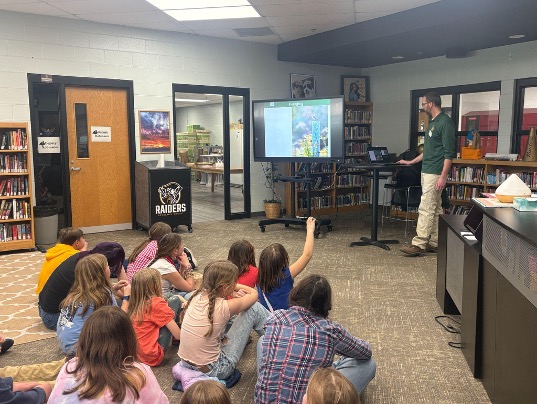
After traveling thousands of miles from South America (primarily Brazil) purple martins are making their way back to Ohio. In preparation for their arrival, ESC students recently learned from Joe Lautenbach, wildlife biologist with the Ohio Department of Natural Resources, about purple martins, along with other migratory species such as bluebirds and chimney swifts.
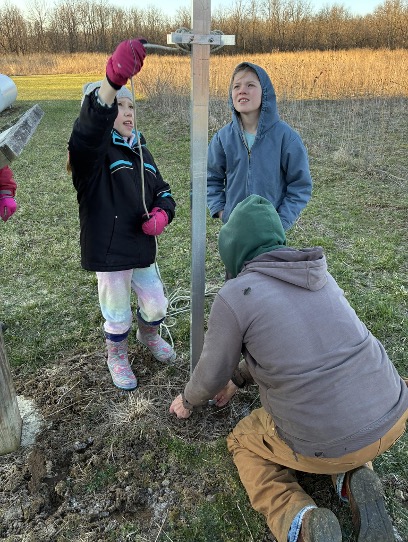
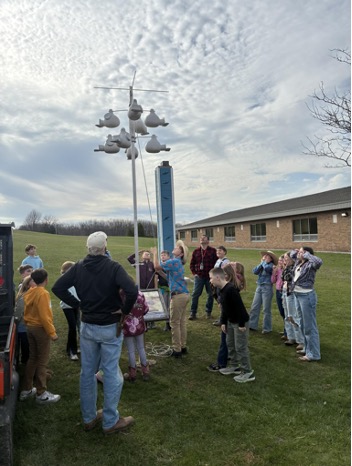
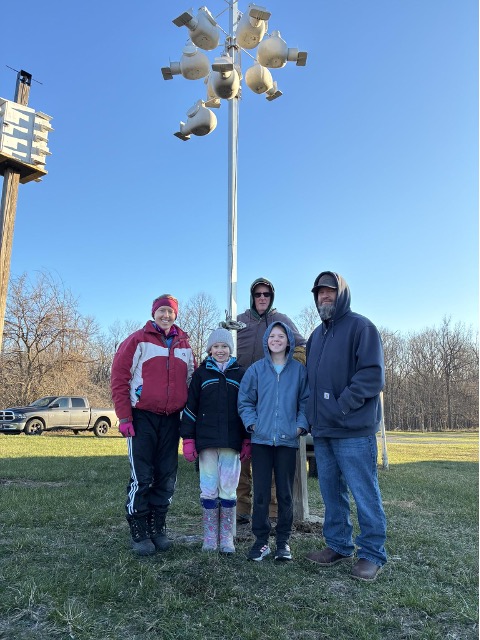
Following the presentation, students took part in an annual tradition, reinstalling the gourd-style birdhouses on the Benjamin Logan campus. These carefully maintained structures serve as essential nesting sites for purple martins during the breeding season.
The effort extends beyond campus. Additional martin housing can be found at Myeerah Nature Preserve, and a newly installed complex at Ohio Hi-Point JVS is expanding habitat opportunities throughout the county.
The purple martin is North America’s largest swallow, known for its graceful flight and incredible endurance. These birds travel 5,000 to 10,000 miles annually, returning to the same nesting sites—and often the same compartments—year after year.
One of the most fascinating facts shared with students is how migrating birds can fly for days using a unique ability called unihemispheric slow-wave sleep, where one half of the brain rests while the other remains alert. It’s just one example of the incredible adaptations that make migration possible.
In the eastern United States, purple martins rely almost entirely on human-provided housing, making efforts like those led by ESC students critical to their continued success.
The week prior to their bird studies, ESC members turned their attention to a much smaller—but equally fascinating—organism: the tardigrade, also known as the “water bear.”
Discovered in 1773, these microscopic creatures are renowned for their ability to survive extreme environments, from intense heat and pressure to even radiation. Students collected moss samples and used compound microscopes to search for these tiny organisms, gaining firsthand experience in scientific observation and discovery.
From reinstalling birdhouses to exploring microscopic life, the Benjamin Logan Environmental Science Club continues to provide meaningful, hands-on learning experiences that connect students to the natural world in powerful ways.
These programs are made possible through the partnership between Benjamin Logan Schools and the Logan County Land Trust, helping to inspire the next generation of environmental stewards.