Welcome to the Resources page of the Logan County Land Trust, your gateway to a wealth of information designed to empower and educate. At LCLT, we believe that fostering a deep understanding of environmental conservation and sustainable land use is integral to building a resilient community.
Discover a Range of Resources: Whether you are a landowner, a community member, or an environmental enthusiast, our Resources page is tailored to meet your diverse needs. From educational materials and guides to articles, webinars, and interactive tools, we offer a curated collection of resources that shed light on the importance of preserving our natural and agricultural heritage.
Connect with Us: Our Resources page is a dynamic space that evolves with the mission of Logan County Land Trust. We invite you to explore, learn, and actively participate in building a future where sustainable land use and conservation are at the forefront of community development.
For more information, feel free to reach out to us. Together, let’s harness the power of knowledge to preserve our natural and agricultural heritage for generations to come.
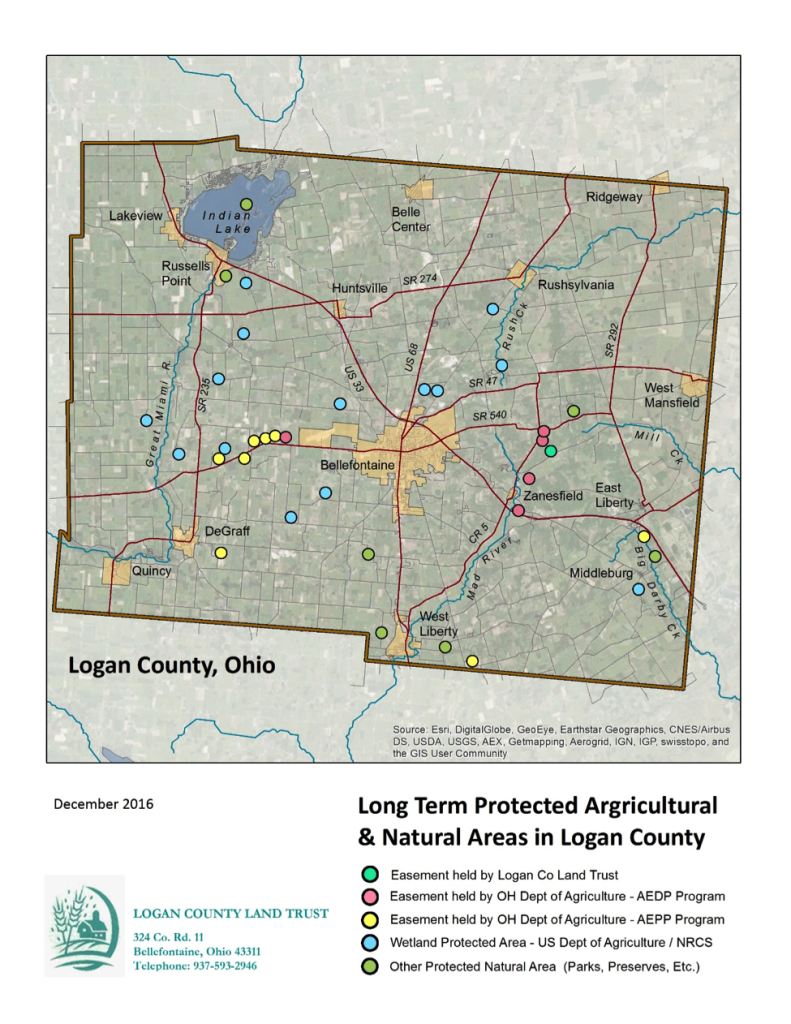
This map depicts protected land throughout the county. Many of these sites are under private ownership but there are also sites on this map that show Public Access land such as Myeerah Preserve, John and Mary Rudolph Nature Preserve, McCracken Fen, Big Darby Headwaters Preserve. This map becomes very important when completing applications for both the Ohio Department of Agriculture’s Ag Easement program and the USDA’s program by showing proximity to other protected lands.
Explore protected lands across Ohio through the State Easement Map. This interactive resource provides a visual look at agricultural and conservation easements throughout the state, helping landowners and community members better understand how preservation efforts are protecting farmland, natural resources, and Ohio’s agricultural heritage for future generations.
The Ohio Department of Agriculture plays a vital role in protecting and strengthening Ohio’s agricultural landscape. Through farmland preservation initiatives, educational resources, and conservation programs, ODA helps landowners safeguard working farms and ensure that agricultural land remains productive for future generations.
Whether you are exploring ways to preserve a family farm, learning about conservation opportunities, or considering participation in the Clean Ohio Local Agricultural Easement Purchase Program (LAEPP), these resources can help guide you through the process.
Farmland Preservation Resources
Learn more about agricultural easements, preservation programs, and how voluntary conservation efforts help protect Ohio’s farming heritage while supporting long-term land stewardship.
Clean Ohio Local Agricultural Easement Purchase Program (LAEPP)
The Clean Ohio LAEPP program provides opportunities for landowners to voluntarily preserve farmland through agricultural easements. Access information, eligibility requirements, and application materials to explore whether this program may be a fit for your land and your family’s long-term goals.
Ohio’s natural resources are among its greatest assets, and the Ohio Department of Natural Resources (ODNR) works to protect and preserve the lands, waters, wildlife, and ecosystems that support our communities. Through conservation programs and land stewardship initiatives, ODNR provides valuable tools and resources for landowners interested in protecting the long-term health of their property.
Agricultural Conservation Easement Program (ACEP)
The Agricultural Conservation Easement Program (ACEP) helps landowners conserve productive agricultural land and important natural resources through voluntary easement agreements. Explore program information, eligibility requirements, and application materials to learn how ACEP can support both conservation goals and the long-term sustainability of working lands.
The USDA Natural Resources Conservation Service (NRCS) helps farmers, landowners, and communities conserve the natural resources that sustain agriculture and healthy ecosystems. Through voluntary conservation programs and technical expertise, NRCS provides support for protecting soil health, improving water quality, enhancing wildlife habitat, and preserving working agricultural lands.
Whether you are interested in conservation practices, financial assistance programs, or long-term land stewardship opportunities, NRCS offers resources designed to help landowners make informed decisions while strengthening both their land and their legacy.
The Logan County Soil and Water Conservation District works alongside landowners, farmers, educators, and community members to promote responsible stewardship of our natural resources. Through education, technical assistance, and conservation programs, the district helps protect soil health, improve water quality, manage natural habitats, and support sustainable land-use practices throughout Logan County.
Whether you are looking for guidance on conservation practices, educational resources, or assistance with land management projects, Logan SWCD serves as a valuable local partner dedicated to preserving the resources that make our community thrive.
The Land Trust Alliance is a national organization dedicated to strengthening land conservation efforts across the United States. Through its network of nearly 1,000 member land trusts, the Alliance helps landowners connect with trusted conservation organizations, learn about land protection options, and better understand the tools available to preserve farmland, natural areas, forests, and wildlife habitat. If you’re exploring conservation opportunities beyond Logan County or looking to connect with a land trust serving a specific region, the Land Trust Alliance is an excellent place to start.
By connecting conservation organizations and promoting best practices, COLT plays an important role in ensuring that preservation efforts remain effective and sustainable for future generations.
The Coalition of Ohio Land Trusts (COLT) is a statewide organization dedicated to strengthening and supporting land trusts across Ohio. Through advocacy, education, collaboration, and shared resources, COLT helps local land trusts protect farmland, natural areas, open spaces, and important community landscapes throughout the state.
By connecting conservation organizations and promoting best practices, COLT plays an important role in ensuring that preservation efforts remain effective and sustainable for future generations.
“Roots So Deep (you can see the devil down there)” is a compelling 4-part documentary series that explores innovative solutions to climate change through regenerative agriculture. Guided by director Peter Byck, the series delves into how an underutilized cattle grazing method, inspired by the natural movements of bison, can transform farming practices. This method has the potential to help farmers escape debt, rejuvenate depleted soils, restore wildlife habitats, and sequester significant amounts of carbon.
The series features interviews with farmers and scientists who are testing and measuring the impact of adaptive grazing. Can this approach, which contrasts with traditional methods, truly mitigate climate change and foster economic sustainability for farmers? Discover the science and stories behind this revolutionary practice and see if it can shift long-standing agricultural traditions towards a more sustainable future.
Explore the journey and the potential of adaptive grazing in “Roots So Deep” and consider how this transformative practice might pave the way for climate resilience.
Zero Foodprint is a nonprofit organization focused on restoring ecosystems and supporting regenerative agriculture through practical, community-driven solutions. By investing in projects that improve soil health, protect water resources, and reduce carbon emissions, Zero Foodprint helps farmers and land stewards implement practices that benefit both the environment and agricultural productivity.
Their work demonstrates how healthy soils and sustainable farming practices can strengthen local food systems while creating lasting environmental impact for future generations.